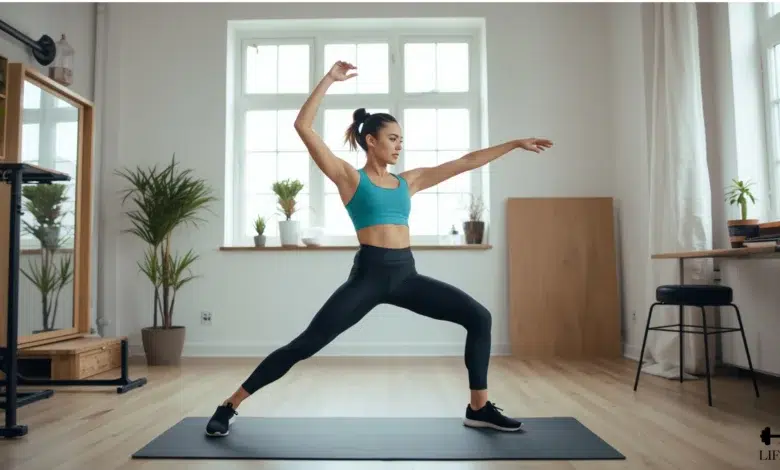
10 Powerful Workout Exercises to Do at Home for Beginners & Advanced 2025
Workout Exercises to Do at Home
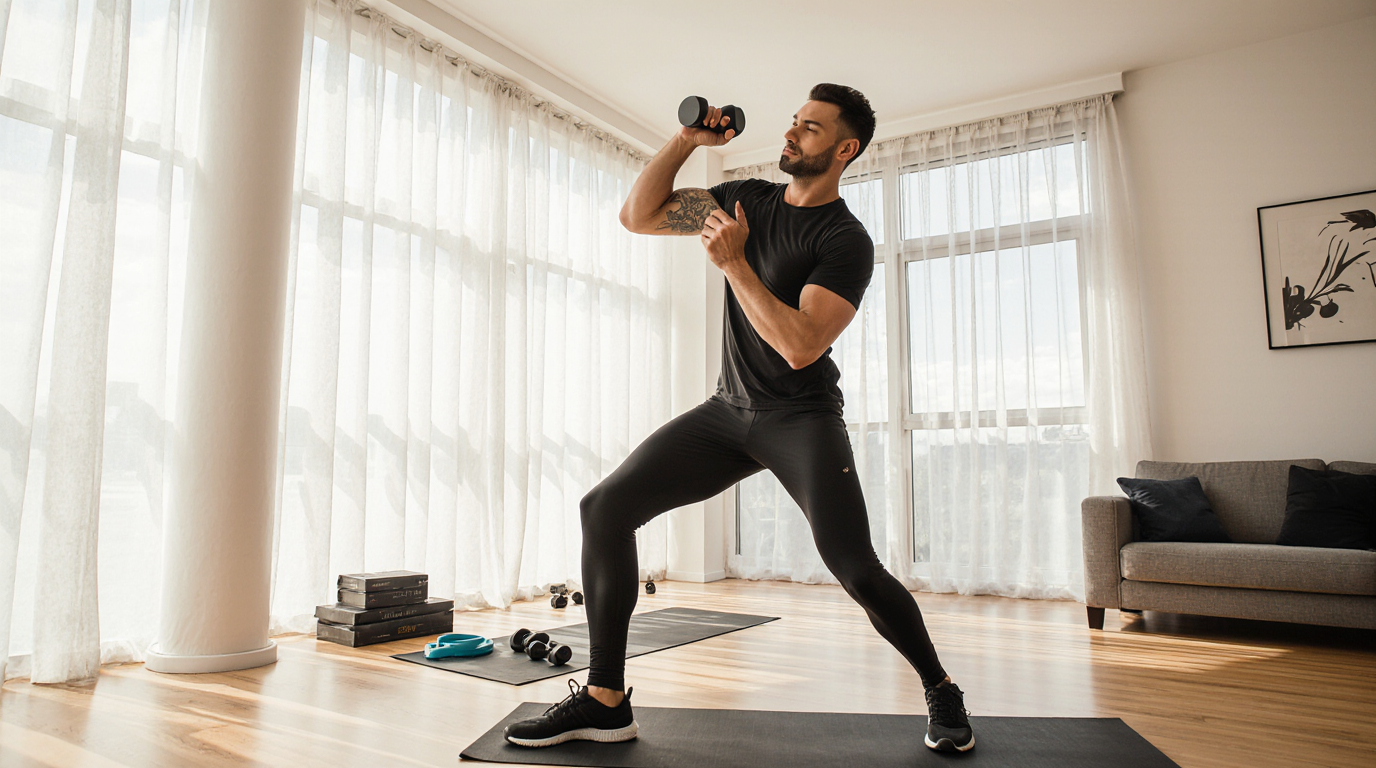
Ready to transform your living room into a fitness studio? You’re in the right place. This guide gives practical, no-nonsense workout exercises to do at home and includes effective exercises to do at home, from warm-ups and no-equipment routines to HIIT, strength plans, mobility exercises, and weekly templates for every level. Discover the best exercises to do at home that fit your lifestyle.
Why Choose Home Workouts?
Top Exercises to Do at Home
Convenience and Consistency
No commute, no waiting for machines — just press play and move. Home workouts remove barriers that often sabotage fitness routines.
Cost and Time Savings
A small set of resistance bands or a single dumbbell can replace a pricey gym membership. Focused 20–30 minute sessions often beat wandering around a gym for an hour.
Essential Principles Before You Begin
Progressive Overload at Home
Gradually increase reps, slow down tempo, or shorten rest periods to keep improving. For example, turn regular push-ups into decline push-ups over time.
FITT: Frequency, Intensity, Time, Type
Creating a schedule for exercises to do at home can enhance your commitment.
Plan how often (frequency), how hard (intensity), how long (time), and what kind (type). Example: 3x/week (frequency), moderate-to-high intensity, 30 minutes, full-body circuits.
Tracking Progress (Simple Methods)
Use a notebook or phone note: record exercise, sets × reps, and how it felt. Tiny logs maintain momentum and demonstrate improvement.
Warm-Up: The Non-Negotiable Start
Explore innovative exercises to do at home to keep your routine fresh and engaging.
Dynamic Warm-Up Routine (5–7 Minutes)
Warm-ups are like priming your car engine — don’t go from 0 to 100 mph cold. Use arm circles, leg swings, hip openers, and bodyweight squats.
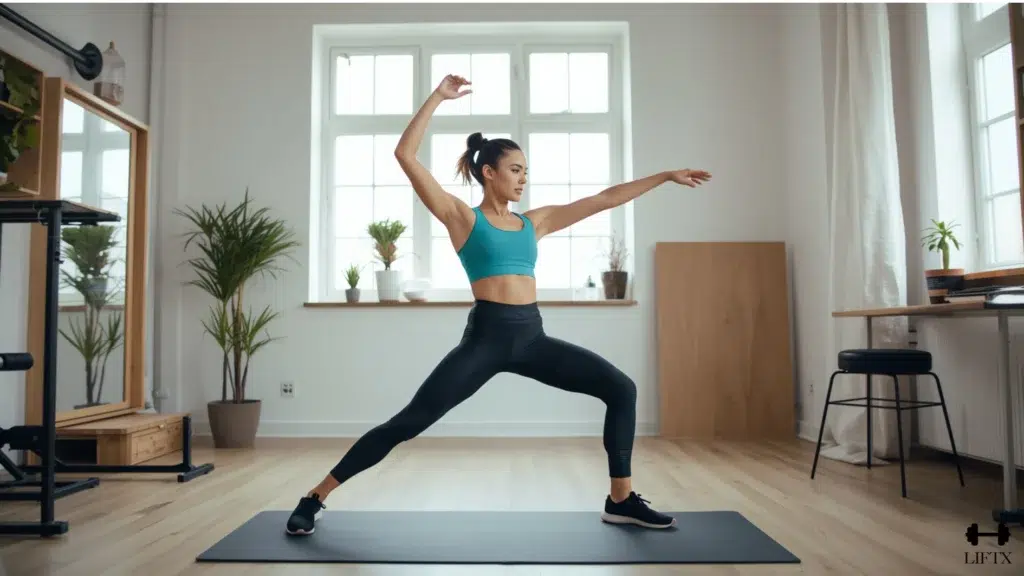
Example Warm-Up Movements
- 30s marching or light jogging in place
- 10 leg swings per leg (front-to-back)
- 10 arm circles forward/back
- 10 bodyweight squats with slow descent
- 30s hip openers (alternating lunges)
No-Equipment Full-Body Moves
Push-Up Family
- Standard push-up
- Incline push-up (hands on a counter) — beginner-friendly
- Diamond push-up — triceps focus
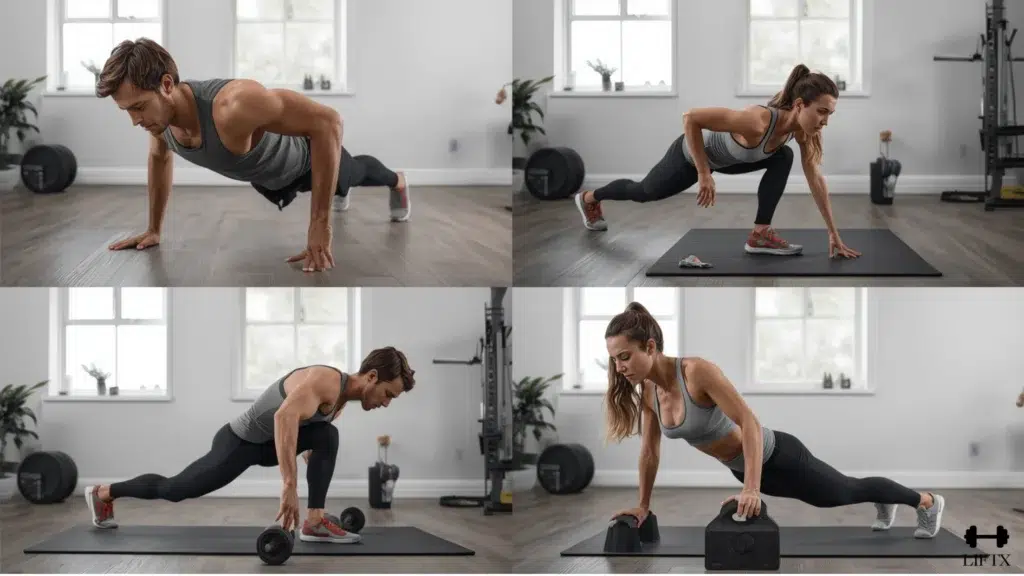
Tip: Keep a straight line from head to heels; slow negatives increase difficulty.
Squats and Lunges
- Bodyweight squats → single-leg pistols for advanced
- Forward, reverse, and walking lunges
Tip: Slow descent increases challenge without weights.
Core Essentials
- Plank holds (front & side)
- Dead bug
- Reverse crunch
Sample Beginner Circuit
3 rounds, 40s work / 20s rest:
- Bodyweight squats
- Incline push-ups
- Plank hold
- Glute bridges
Incorporate various exercises to do at home like burpees, squats, and push-ups to maximize your workout.
Simple Equipment That Multiplies Your Options
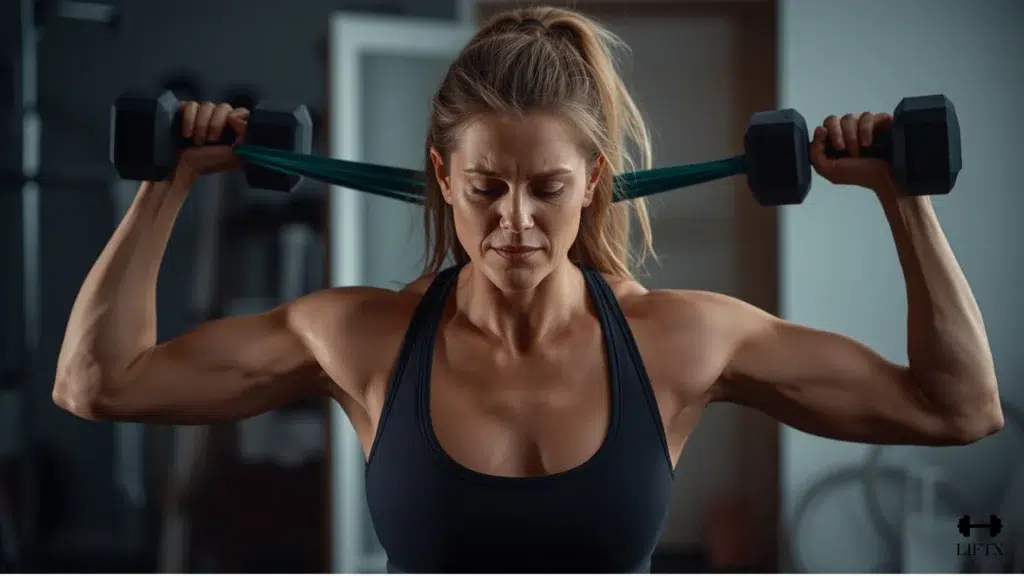
Resistance Bands
Versatile and cheap. Use for rows, presses, banded squats, and glute work.
Dumbbells / Kettlebell Alternatives
Single dumbbell unlocks presses, goblet squats, and one-arm rows.
Cheap/DIY Equipment Tips
Backpack filled with books = kettlebell substitute. Towels for sliding lunges on hardwood floors.
Cardio & HIIT Routines at Home
10-Minute HIIT Example
Repeat 3 rounds:
- 30s burpees
- 30s mountain climbers
- 30s high knees
- 30s rest
Low-Impact Cardio Option
Marching high knees, step-ups on stairs, or shadow boxing.
Strength-Focused Home Workouts
Progressive Plans (4–8 Weeks)
Week 1–2: Learn movements
Week 3–5: Increase intensity
Week 6–8: Add variations and tempo changes
Sample Strength Session (Intermediate)
3 sets each:
- Goblet squat — 8–10 reps
- One-arm row (band/dumbbell) — 8–10 reps/side
- Push-up — 8–12 reps
- Romanian deadlift (single-leg) — 8 reps/side
Mobility, Flexibility & Recovery
Cool-Down Routine (5–8 Minutes)
Stretch major muscle groups after workouts: hamstrings, chest, hip flexors.
Foam Rolling Alternatives
Use a tennis ball for shoulders, glutes, and back.
Weekly Templates — Beginner to Advanced
3-Day Beginner Plan
- Day 1: Full-body circuit (bodyweight)
- Day 2: Active recovery/yoga
- Day 3: Full-body strength (light resistance)
5-Day Split for Intermediates
- Day 1: Upper push
- Day 2: Lower strength
- Day 3: Cardio/HIIT
- Day 4: Upper pull
- Day 5: Full-body metabolic session
Nutrition, Sleep & Hustle
Simple Fueling Pre/Post-Workout
- Pre: banana + nut butter
- Post: smoothie with protein, or chicken + rice + veggies
Tip: Sleep 7–9 hours consistently for best recovery.
Tracking Progress Without Fancy Gadgets
Photos, tape measures, and small performance tests (push-ups in 1 minute) are enough to monitor progress.
Common Mistakes & How to Avoid Them
- Overtraining
- Poor form
- Skipping warm-ups
Remember: Quality beats quantity.
Motivation Tricks
- Habit stacking: pair workouts with existing routines
- Accountability: text a friend or use an app to track sessions
Safety & When to See a Pro
- Stop for sharp pain, dizziness, or swelling
- Chronic injuries? Consult a physical therapist
Conclusion
Home workouts are not a compromise — they’re an opportunity. With workout exercises to do at home, proper structure, and consistency, you’ll build strength, endurance, and confidence without stepping into a gym.
FAQs
Q1: Do I really need equipment to see results?
A1: No — bodyweight exercises suffice if you use progressive overload.
Q2: How often should I workout?
A2: 3–5 sessions per week. Consistency > duration.
Q3: How do I prevent boredom?
A3: Rotate exercises, try new variations, micro-challenges, or social accountability.
Q4: Can I build muscle at home?
A4: Yes — focus on progressive resistance, even with bands or bodyweight.
Q5: Best warm-up for home workouts?
A5: 5–7 minute dynamic routine: light cardio, leg swings, arm circles, squats.
Please don’t forget to leave a review.
Remember, the best results come from consistent exercises to do at home.
Utilizing exercises to do at home allows for flexibility and convenience in your fitness journey.
Consider tracking your exercises to do at home to measure your progress.
Find inspiration for new exercises to do at home through fitness apps or websites.
Remember to modify exercises to do at home to suit your fitness level.
Incorporate exercises to do at home that require minimal equipment for versatility.
Set realistic goals with your exercises to do at home to maintain motivation.
Stay informed about new exercises to do at home by following fitness trends.
Pair your exercises to do at home with a balanced diet for optimal results.
Utilizing exercises to do at home can lead to a healthier lifestyle and a happier you.